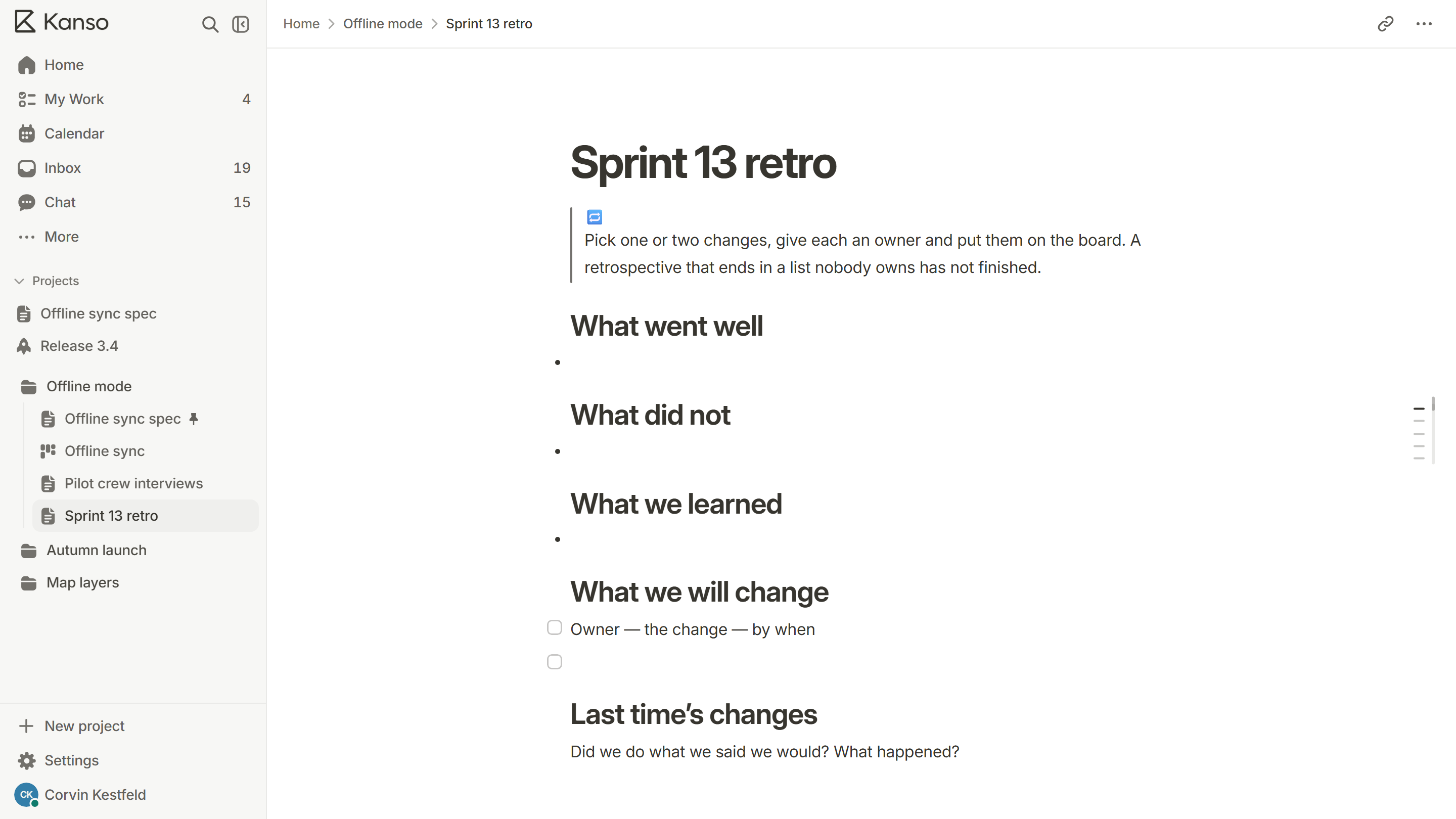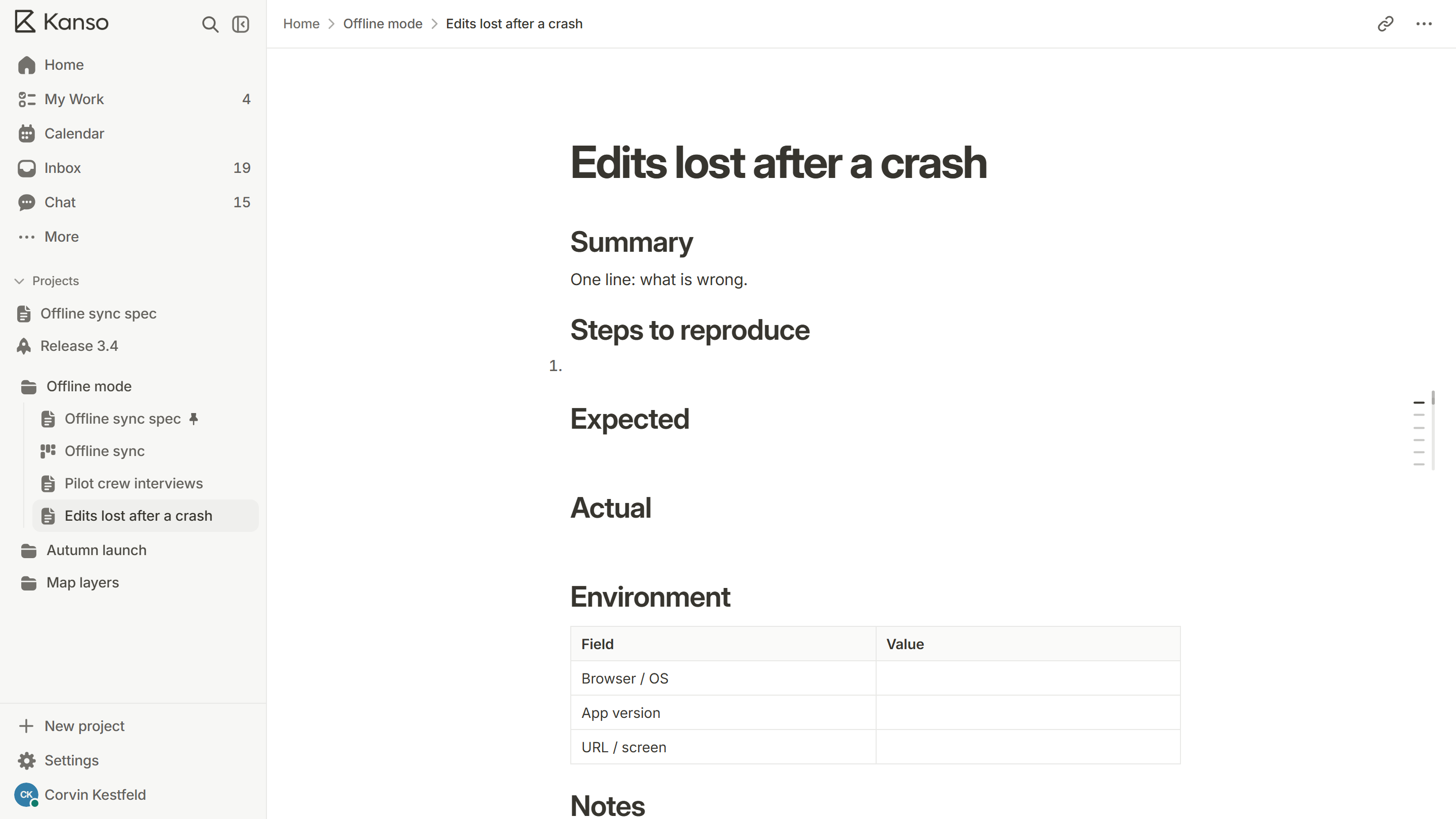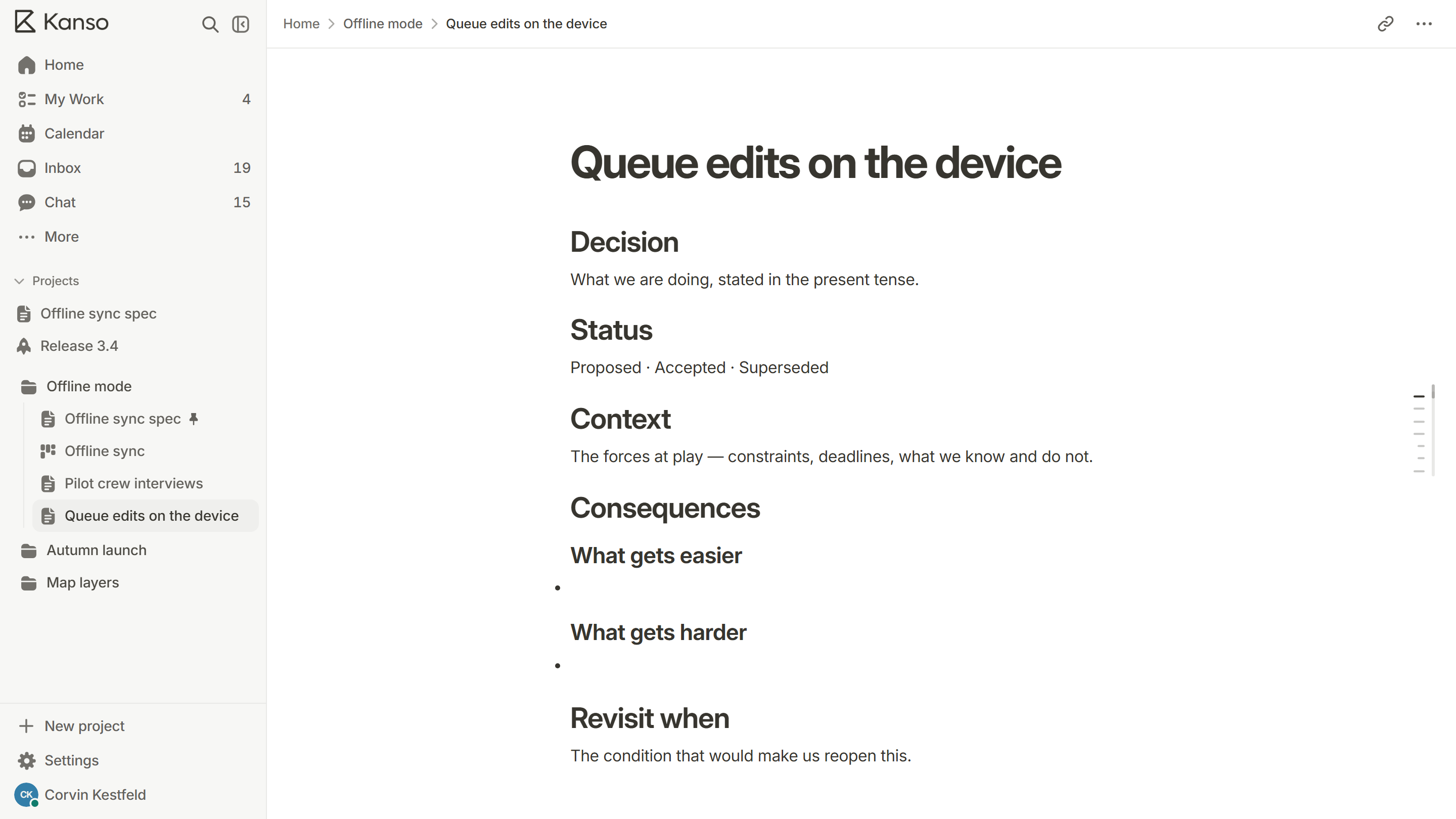

Incident postmortem template
Learn from what broke, without looking for someone to blame.
How to fill it in
- 1Say what broke, and for how long.
- 2Write what happened, in order.
- 3Ask why until you reach a cause.
- 4Turn each action into an owned task.
More in the guide: How to write a blameless incident postmortem
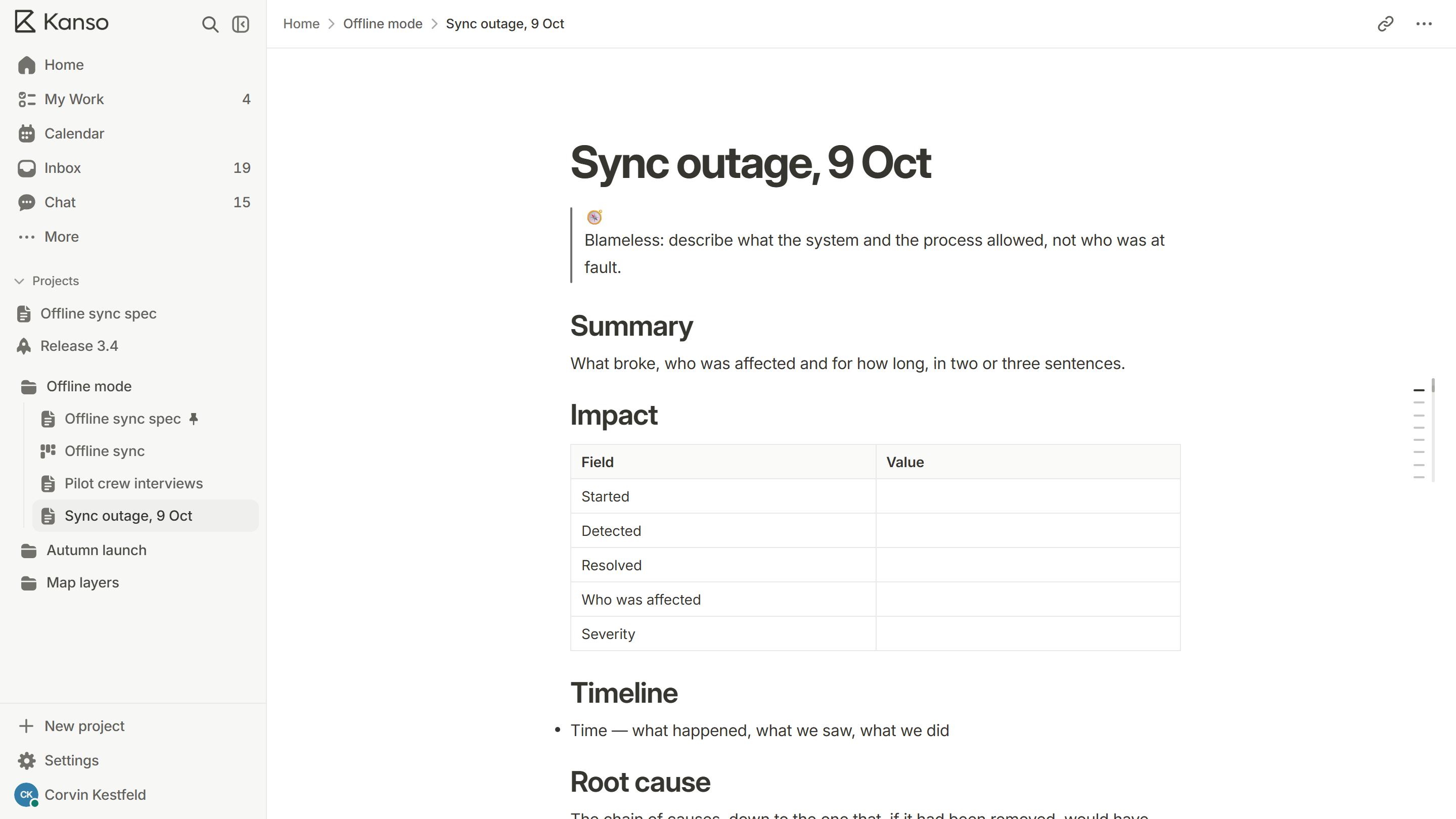
This looks at how the system and the process let this happen, not at who did what. Assume everyone did their best with what they knew.
Summary
| What broke | |
|---|---|
| Who was affected | How many customers, and what they could not do |
| Started | |
| Fixed | |
| Severity | |
| How we found out | An alert, a customer, by chance |
Hour by hour
| Time | What happened |
|---|---|
| The change or event that began it | |
| First sign of trouble | |
| Someone noticed | |
| Cause understood | |
| Fix applied | |
| Confirmed healthy |
Why it happened
Keep asking why until the answer is something we can change.
- Why did it break?
- Why did that happen?
- Why was that possible?
- Why did nothing stop it sooner?
What helped, and what got in the way
- Went well:
- Went badly:
- Got lucky:
Actions
| Action | Stops it, spots it sooner, or fixes it faster | Owner | Due |
|---|---|---|---|
Tell people
- Customers told what happened and what we changed
- Shared with the rest of the team
InsideSummaryHour by hourWhy it happenedWhat helped, and what got in the wayActionsTell people
Questions
One that looks at what the system and the process allowed to happen instead of who made the mistake, so people are honest about failures.