
Why plan the week
Most of a working week is reaction: messages, reviews, requests. Without a plan, the urgent crowds out the important, and the work that moves the product is done last. A weekly plan is a small act of choosing what the week is for.
A ten-minute routine
- Look at what is due. Open the calendar and list the dates that cannot move: releases, reviews, meetings with deadlines.
- List your open tasks. Everything assigned to you, in one place.
- Rank them. What is critical this week, what is next and what can wait?
- Estimate honestly. How long will each take, including review and rework? Multiply by about one and a half if you always run late.
- Count your time. Subtract meetings, support duty and focus time you need. What is left is your capacity.
- Choose and place. Pick what fits and put it in the days, hardest work in your best hours.
- Leave room. Plan about two thirds of your time. The rest absorbs the unexpected.
A way to group your tasks
| Group | What goes in it |
|---|---|
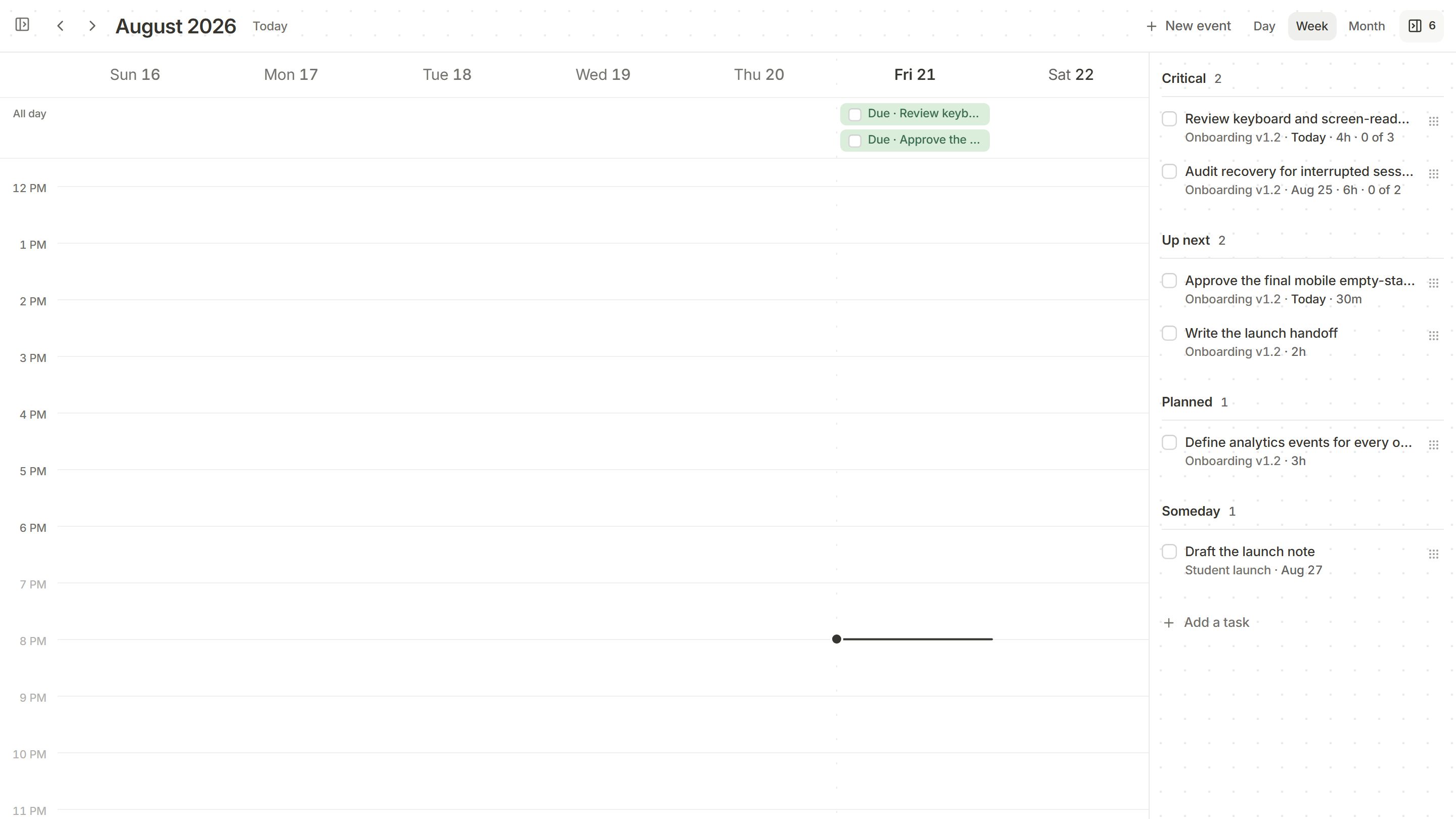
| Critical | Due this week, or blocking someone else |
| Up next | Important, and will be next when critical is done |
| Planned | Has a date later in the month |
| Someday | A good idea with no date; reviewed weekly, never forgotten |
Critical
What goes in it
Due this week, or blocking someone else
Up next
What goes in it
Important, and will be next when critical is done
Planned
What goes in it
Has a date later in the month
Someday
What goes in it
A good idea with no date; reviewed weekly, never forgotten
Protect the important work
- Put a block of focus time in the calendar and treat it as a meeting.
- Batch reviews and replies into set times.
- Say no, or not yet, to new requests until you have checked the plan.
Review at the end
On Friday, spend five minutes on what was done and what was not. Move what was not to next week on purpose, or drop it. Over a few weeks you will learn how much you can really do, which makes the next plan better.
A sample week
| Day | A plan with room in it |
|---|---|
| Monday | Plan the week (ten minutes). Two hours of focus on the critical task. Reviews in the afternoon |
| Tuesday | Focus block in the morning on the second task. Meetings after lunch |
| Wednesday | Focus block, then pair on a teammate’s task. Leave the afternoon open |
| Thursday | Finish and ship what is nearly done. Reviews and replies |
| Friday | Tidy up, write the update, review the week and set up Monday |
Monday
A plan with room in it
Plan the week (ten minutes). Two hours of focus on the critical task. Reviews in the afternoon
Tuesday
A plan with room in it
Focus block in the morning on the second task. Meetings after lunch
Wednesday
A plan with room in it
Focus block, then pair on a teammate’s task. Leave the afternoon open
Thursday
A plan with room in it
Finish and ship what is nearly done. Reviews and replies
Friday
A plan with room in it
Tidy up, write the update, review the week and set up Monday
Estimating honestly
- Include the work around the work: review, rework, waiting for answers.
- If you are always late, multiply your instinct by one and a half and see.
- Compare estimate and actual on a few tasks. The pattern will teach you more than any rule.
- When a task is much larger than you thought, say so early, and split it.
When the week goes wrong
Something urgent will arrive on Tuesday. When it does, do not just add it to the pile. Put it on the plan, take something off to make room and say what you took off, to the person who cares about it. A plan that bends, openly, is a good plan. One that is quietly abandoned teaches you not to plan.
- If the urgent thing is smaller than an hour, do it and note it.
- If it is bigger, decide what moves, and tell the owner of the thing that moves.
- If it keeps happening, count how much time it takes and plan for it next week.
Planning your week in Kanso
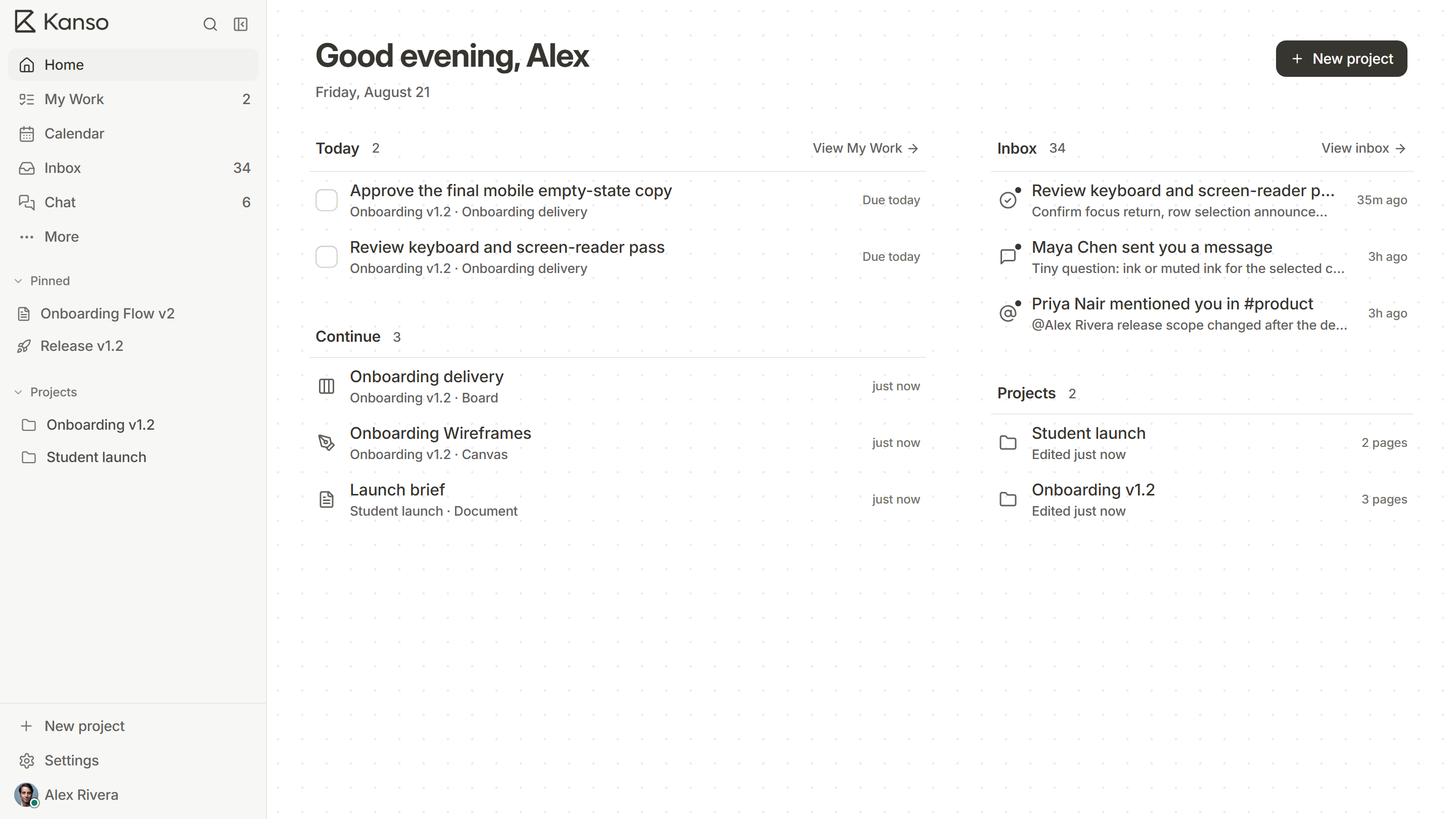
In the Kanso calendar, due dates land on the week by themselves and your open tasks sit beside it, grouped as Critical, Up next, Planned and Someday, each with its estimate. Switch between day, week and month, and change a date on the board and the calendar already knows. Home opens on today’s tasks.