
What sprint planning is
A sprint is a fixed period, usually one to four weeks, in which a team aims to finish a chosen set of work. Sprint planning is the meeting at the start where the team picks that work and agrees how it will approach it. The output is a goal and a short list of committed work.
Five steps
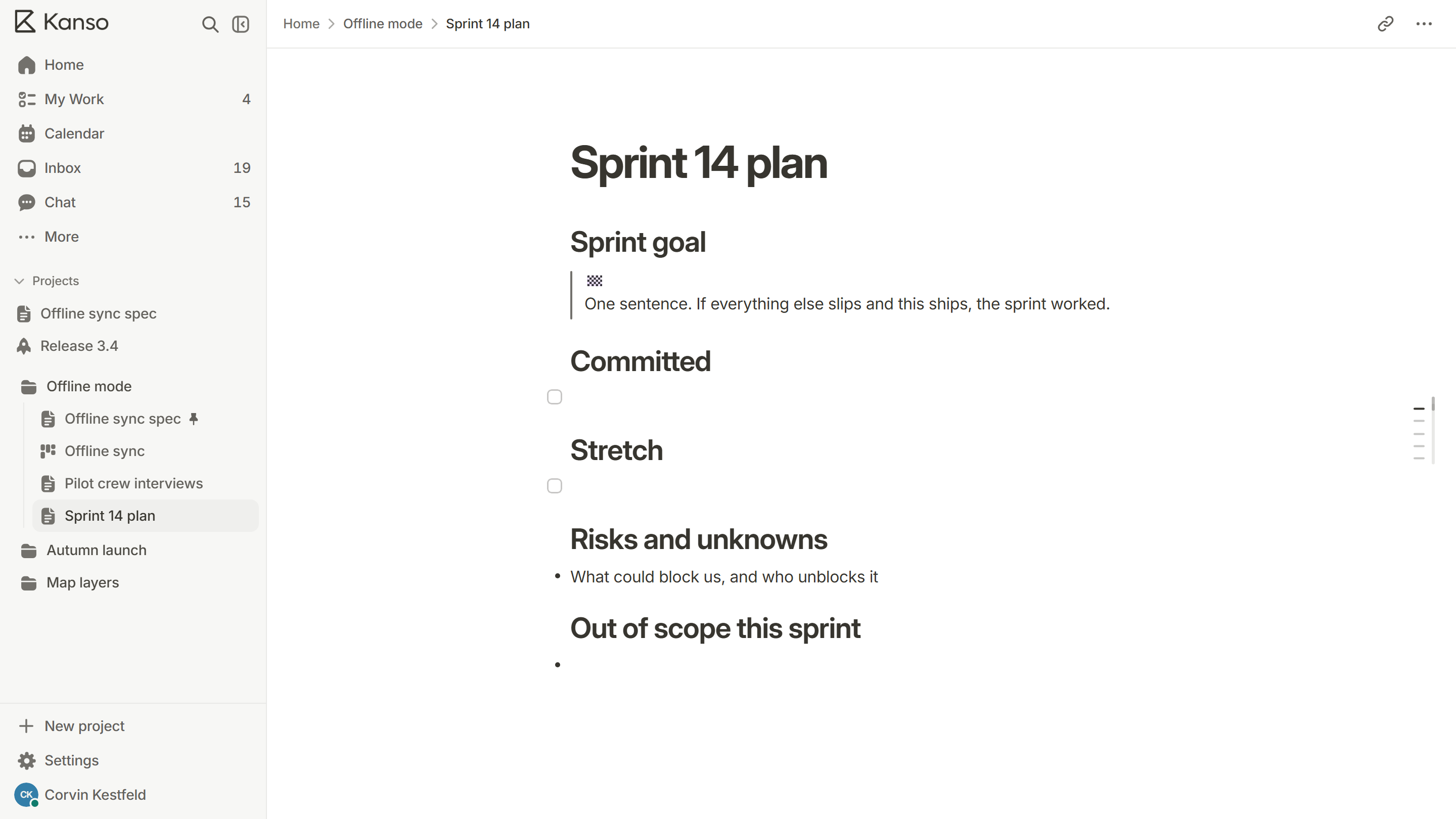
- Set the goal. One sentence. If everything else slips and this ships, the sprint worked.
- Check capacity. Count the days people are actually available. Holidays, support duty and meetings take real time.
- Choose the work. Start from the top of the ranked backlog and stop when the capacity is used. Include fewer items than the maximum.
- Break it down. Make each item small enough to finish in a couple of days, and check each has acceptance criteria.
- Name the risks. What could block us, and who unblocks it? Write it down.
Commit to less than you can do
Plans fail on the unexpected: a bug that needs a day, a colleague who is ill, a requirement that was unclear. Leave room for them. A team that finishes what it committed to, and then picks up something extra, trusts its own plans. One that overcommits every time stops believing them.
Mark the stretch
Keep a short “stretch” list of work you will do if there is time. That way, finishing early is planned for and the committed list stays honest.
If you do not use sprints
Teams that work in continuous flow still benefit from a regular planning moment. Once a week, decide what the next few days are for, look at what is blocked and agree what comes off the list. The goal and the risks matter just as much as the cadence.
Mistakes to avoid
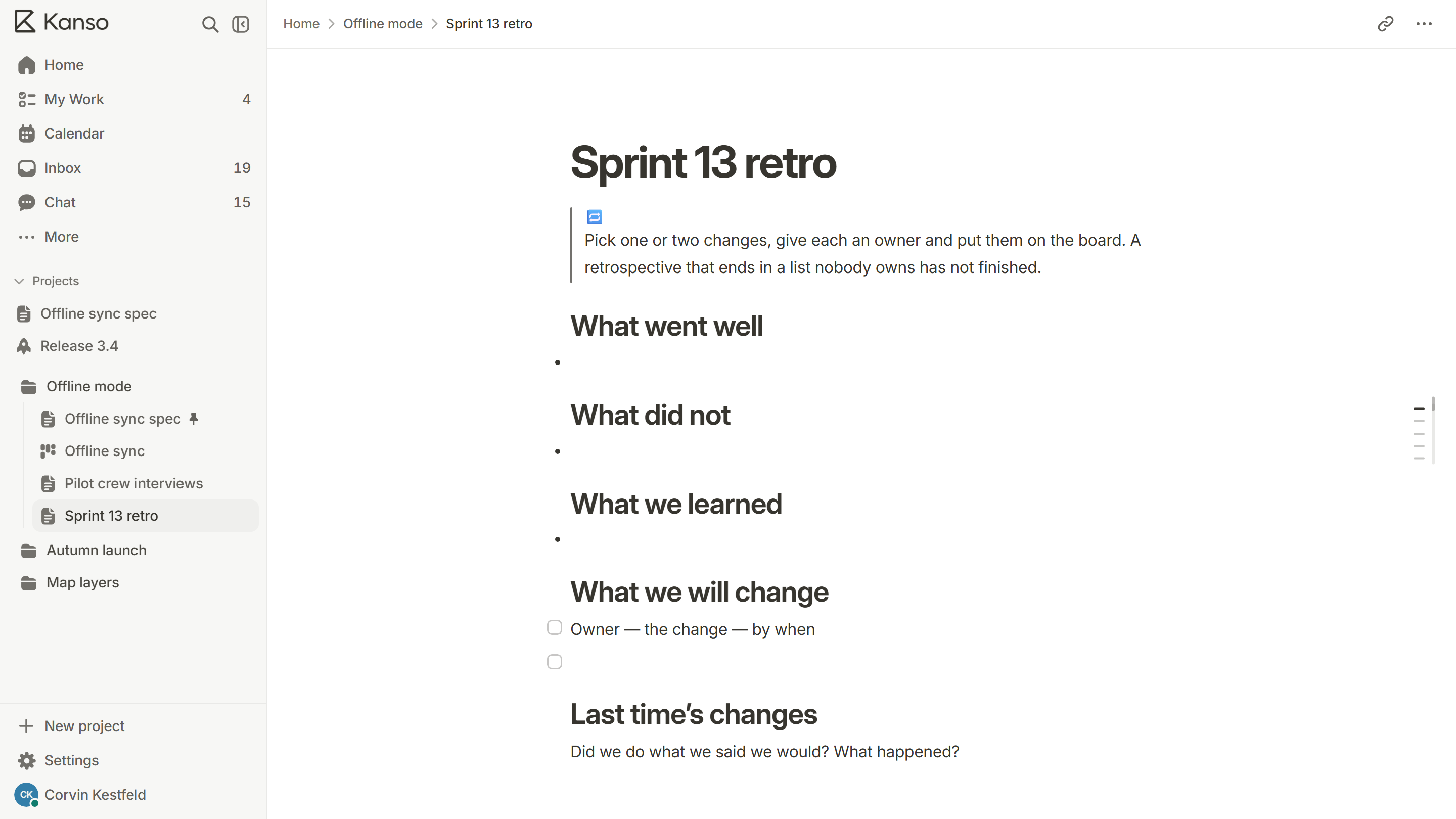
- Planning without a goal, so the sprint is just a pile of tickets.
- Using the best case as the capacity.
- Adding new work mid-sprint without removing anything.
- Skipping the retrospective, so the next plan repeats the last one’s mistakes.
Estimating the work
Teams estimate in days, in points or not at all. Whichever you use, three habits help:
- Estimate with the people who will do the work. An estimate handed down is a guess made by the wrong person.
- Estimate in ranges when you are unsure. “Two to four days” says more than “three”.
- Keep a record of estimates against what happened. After a few sprints, you will know how much to trust your own.
Splitting a big item
If an item will take more than a few days, split it. Good ways to split:
- By step: do the first thin slice of the whole flow before polishing any one part.
- By case: the common case first, the rare cases after.
- By risk: the part you are least sure of first, so the surprise comes early.
- By user: one kind of person first, then the next.
Handling interruptions
Support, urgent bugs and questions will arrive. Plan for them rather than pretending they will not: set aside a share of capacity, often 10 to 20 percent, for unplanned work, and rotate who takes the interruptions so the others can keep their focus. If unplanned work regularly takes more than that, it is telling you something about the product or the process.
A sprint plan in Kanso
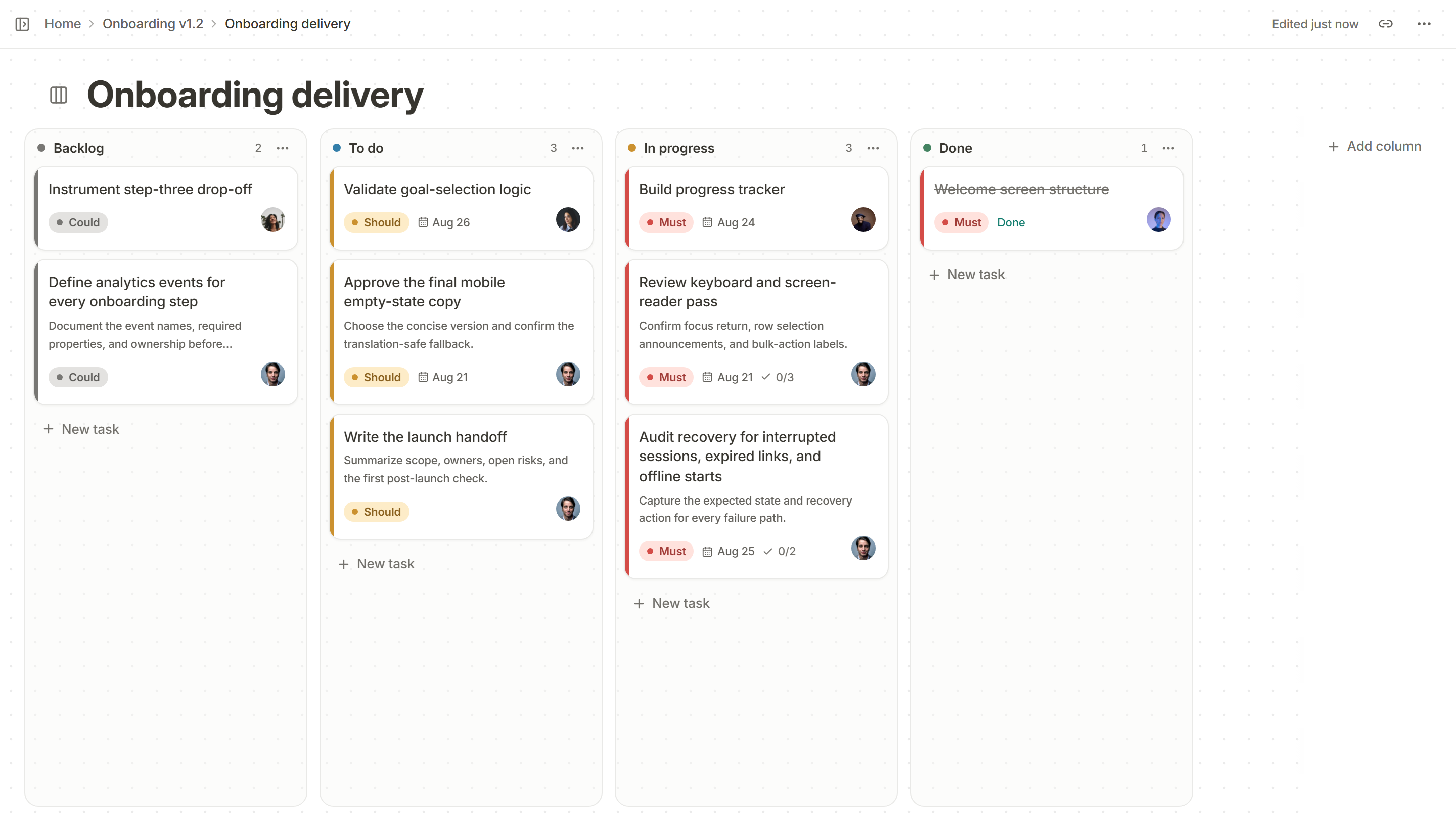
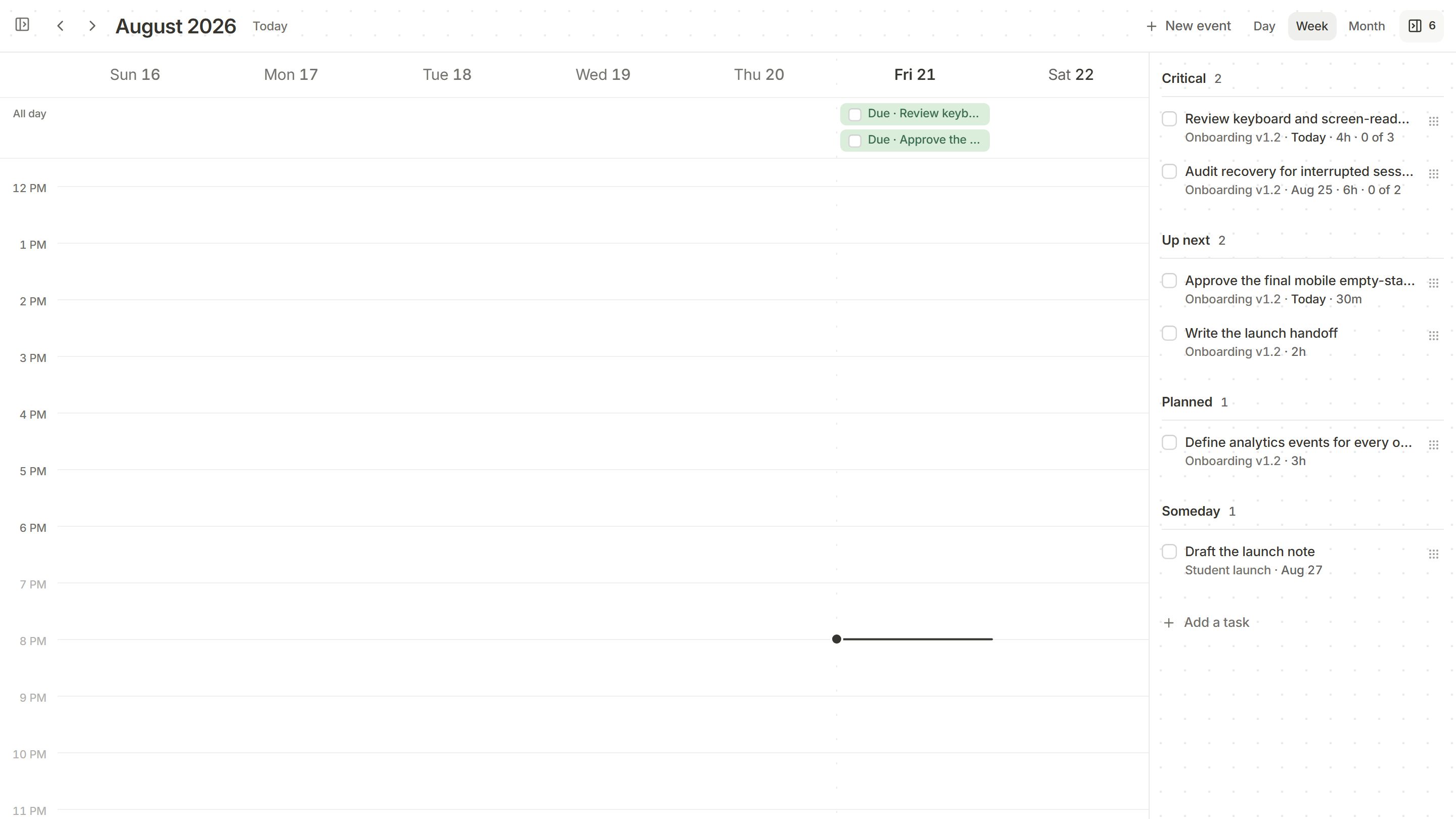
Use the sprint plan template: sprint goal, committed work, stretch, risks and what is out of scope. Turn the committed to-dos into cards on the board and see the due dates on the calendar. Kanso has no sprint object, so a sprint is a page and a board for the period, which suits teams that mix sprints and flow.