
What MoSCoW means
MoSCoW is a prioritization method. The capital letters in the name stand for four groups; the lower-case o’s are only there to make it pronounceable.
| Group | What it means | A test for it |
|---|---|---|
| Must have | Without it the release fails or cannot ship | Would we cancel the release if this were missing? |
| Should have | Important, but the release works without it | Would we be unhappy, but still ship? |
| Could have | Nice to have; the first to go if time runs short | Would anyone notice if it slipped? |
| Won’t have this time | Agreed to be out of scope, for now | Have we said so in writing? |
Must have
What it means
Without it the release fails or cannot ship
A test for it
Would we cancel the release if this were missing?
Should have
What it means
Important, but the release works without it
A test for it
Would we be unhappy, but still ship?
Could have
What it means
Nice to have; the first to go if time runs short
A test for it
Would anyone notice if it slipped?
Won’t have this time
What it means
Agreed to be out of scope, for now
A test for it
Have we said so in writing?
How much should be a Must?
The method’s authors suggest keeping Must items to about 60 percent of the planned effort, with Should and Could making up the rest. The spare room is the point: if a Must goes wrong, the team has Should and Could items it can drop. A release made only of Musts has no room for surprises.
How to run a MoSCoW session
- Put every candidate item on a card, with a one-line description.
- Start with the Won’ts. It is easier to agree what is out than what is in.
- Go through the rest and place each in Must, Should or Could. Argue for the Musts, because every Must has a cost.
- Count the effort in each group and check the Musts against the 60 percent guide.
- Write down the Won’ts where everyone can see them, so they are not reopened every week.
Common mistakes
- Calling everything a Must because everything feels important.
- Prioritizing the item’s size instead of its value. A big Could is still a Could.
- Skipping the Won’ts, then arguing about them in the middle of the work.
- Setting priorities once and never revisiting them as the date approaches.
A worked example
A team has six weeks to ship a new onboarding flow, with about 40 days of work available. These are the candidates:
| Item | Effort | Group | Why |
|---|---|---|---|
| Account creation and email check | 8 days | Must | Nobody can start without it |
| Guided first project | 10 days | Must | It is the point of the release |
| Invite teammates step | 5 days | Should | Valuable, but people can invite later from settings |
| Import from a spreadsheet | 8 days | Could | Helpful for some, needed by few at the start |
| Animated welcome | 4 days | Could | Pleasant, and the first to drop |
| Multi-language onboarding | 12 days | Won’t this time | Agreed for the next release |
Account creation and email check
Effort
8 days
Group
Must
Why
Nobody can start without it
Guided first project
Effort
10 days
Group
Must
Why
It is the point of the release
Invite teammates step
Effort
5 days
Group
Should
Why
Valuable, but people can invite later from settings
Import from a spreadsheet
Effort
8 days
Group
Could
Why
Helpful for some, needed by few at the start
Animated welcome
Effort
4 days
Group
Could
Why
Pleasant, and the first to drop
Multi-language onboarding
Effort
12 days
Group
Won’t this time
Why
Agreed for the next release
The Musts total 18 days, which is under 60 percent of 40. With the Shoulds and Coulds, the plan comes to 35 days and leaves five spare. If something goes wrong, the Coulds are the first to go, then the Should. The Won’t is written down, so it is not reopened every week.
MoSCoW and other ways to rank
| Method | Best for | Watch for |
|---|---|---|
| MoSCoW | Agreeing what is in a release with a fixed date | Everything drifting into Must |
| Value against effort | Ranking a long list of ideas | Guessing value and effort too confidently |
| RICE scoring | Comparing many items with numbers | False precision from invented numbers |
| Simple order | A small team with a short list | Nothing says what is out |
MoSCoW
Best for
Agreeing what is in a release with a fixed date
Watch for
Everything drifting into Must
Value against effort
Best for
Ranking a long list of ideas
Watch for
Guessing value and effort too confidently
RICE scoring
Best for
Comparing many items with numbers
Watch for
False precision from invented numbers
Simple order
Best for
A small team with a short list
Watch for
Nothing says what is out
Use the lightest method that gets agreement. MoSCoW is popular for software releases because it ends with a clear cut line.
MoSCoW in Kanso
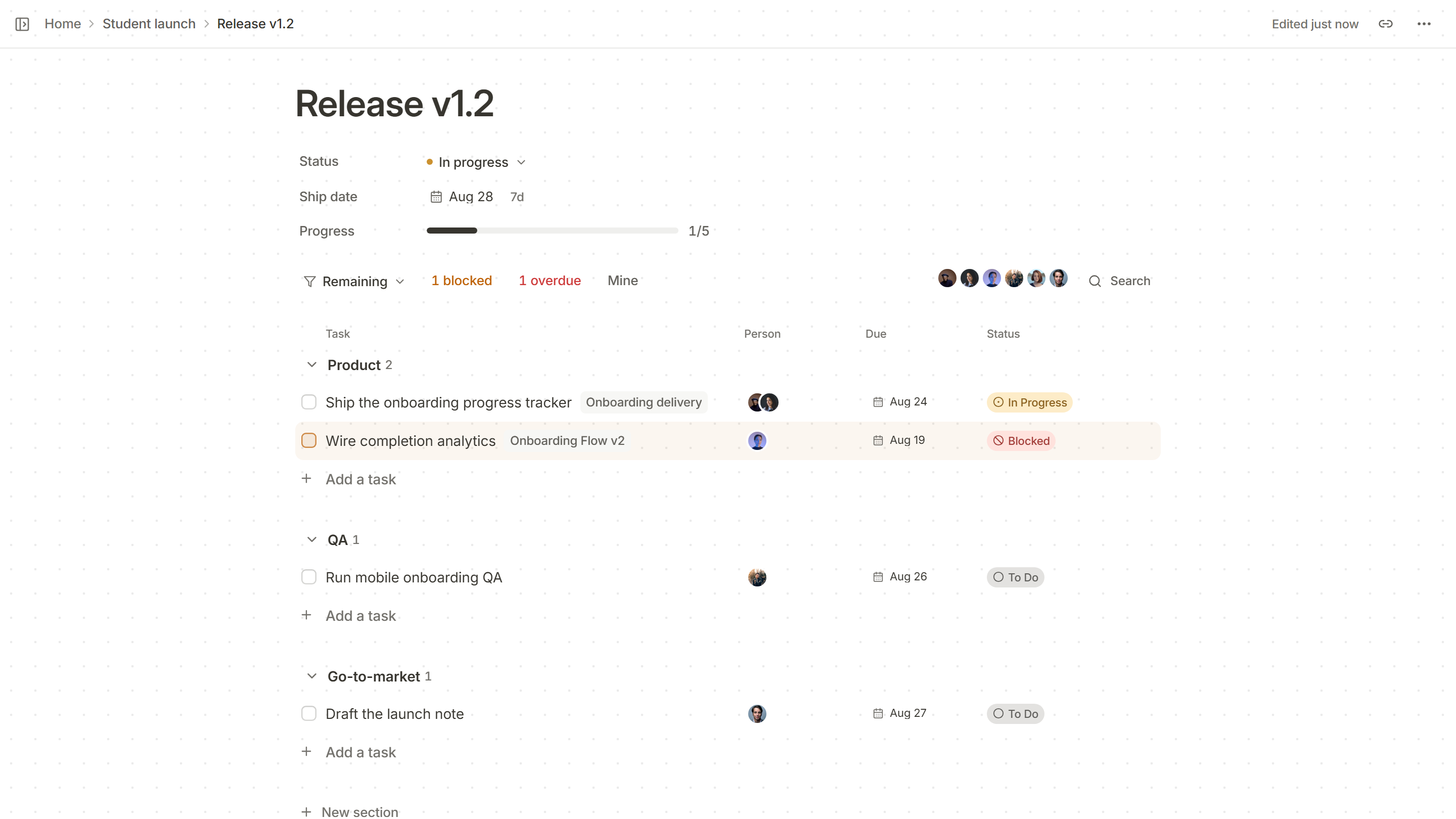
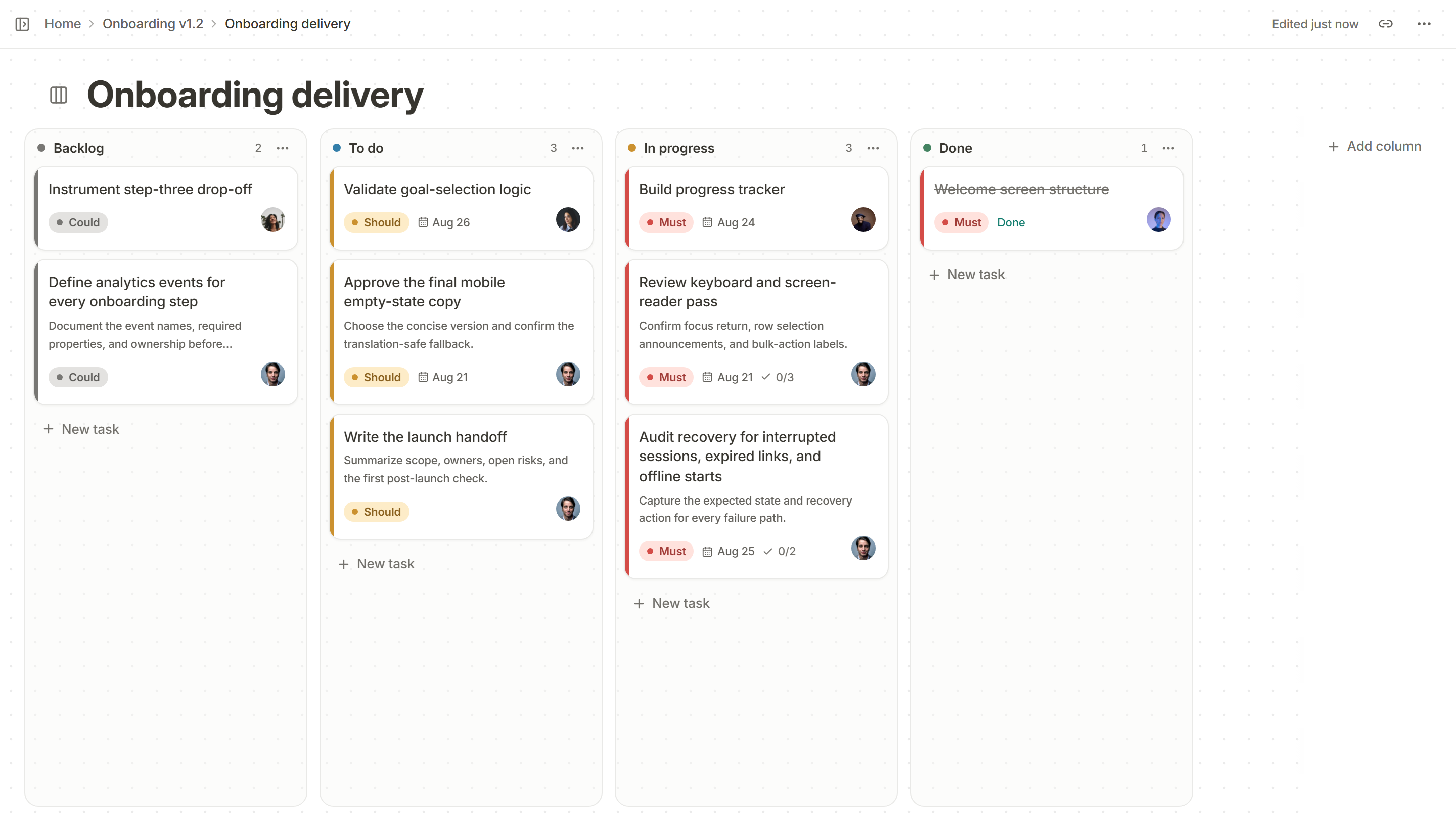
Every card on a Kanso board has a priority of Must, Should or Could that you can read from across the room, so the order of work is never a guess. Group or filter the board by priority to see what is left of each group, and give each release its own release page to see what the date depends on.