
What a definition of done is
A definition of done, often shortened to DoD, is a short list of things that must be true of any piece of work before the team calls it finished. It is agreed once, applies to every task and is the same for everyone. It exists to end the argument about whether something is “really done”.
How it differs from acceptance criteria
| Acceptance criteria | Definition of done | |
|---|---|---|
| Belongs to | One task | The whole team |
| Says | What this task must do | What every task must go through |
| Written by | The person who asked for the work, with the builder | The team, together |
| Example | “The banner names both versions of a conflict” | “Reviewed, tested and documented” |
Belongs to
Acceptance criteria
One task
Definition of done
The whole team
Says
Acceptance criteria
What this task must do
Definition of done
What every task must go through
Written by
Acceptance criteria
The person who asked for the work, with the builder
Definition of done
The team, together
Example
Acceptance criteria
“The banner names both versions of a conflict”
Definition of done
“Reviewed, tested and documented”
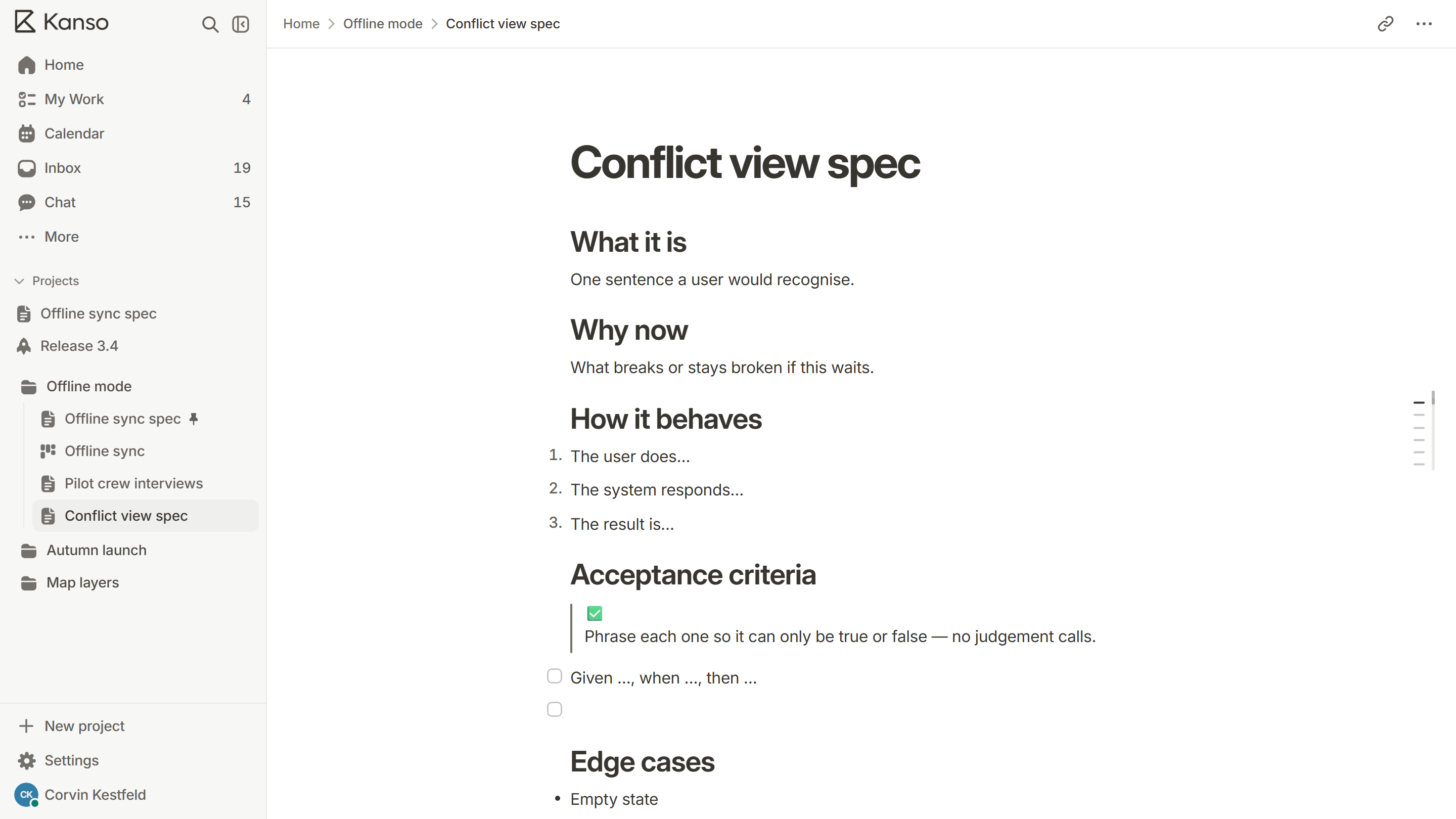
A task is finished when its own acceptance criteria are met and the definition of done is satisfied. The first says the right thing was built; the second says it was built well.
An example to adapt
How to build one
- Ask the team what has gone wrong after a task was called done: a missing test, no documentation, a bug found in staging.
- Turn each answer into a line that is either true or false.
- Keep it to five to eight lines. A long list will be ignored.
- Put it where the team will see it every day, beside the board.
- Review it in each retrospective and change a line when the team learns something.
Mistakes to avoid
- A definition of done that only one person wrote.
- Lines that cannot be checked, such as “high quality”.
- Letting it quietly lapse when a deadline is close. That is when it matters most.
Definition of ready, the other end
The definition of done says when work is finished. A definition of ready says when work is ready to start: the task is small enough, it has acceptance criteria, its dependencies are known and someone has agreed to own it. It stops half-understood work from entering the board. Keep it just as short, and use it as a conversation, not a gate that blocks urgent work.
How it grows with the team
| Team | A reasonable definition of done |
|---|---|
| A new team of two or three | Works, reviewed by another person, merged |
| A team with testers and releases | Reviewed, tested, acceptance criteria met, release notes updated |
| A mature team with many users | The above, plus monitored in production, documented and checked against its success measure |
A new team of two or three
A reasonable definition of done
Works, reviewed by another person, merged
A team with testers and releases
A reasonable definition of done
Reviewed, tested, acceptance criteria met, release notes updated
A mature team with many users
A reasonable definition of done
The above, plus monitored in production, documented and checked against its success measure
When it collides with a deadline
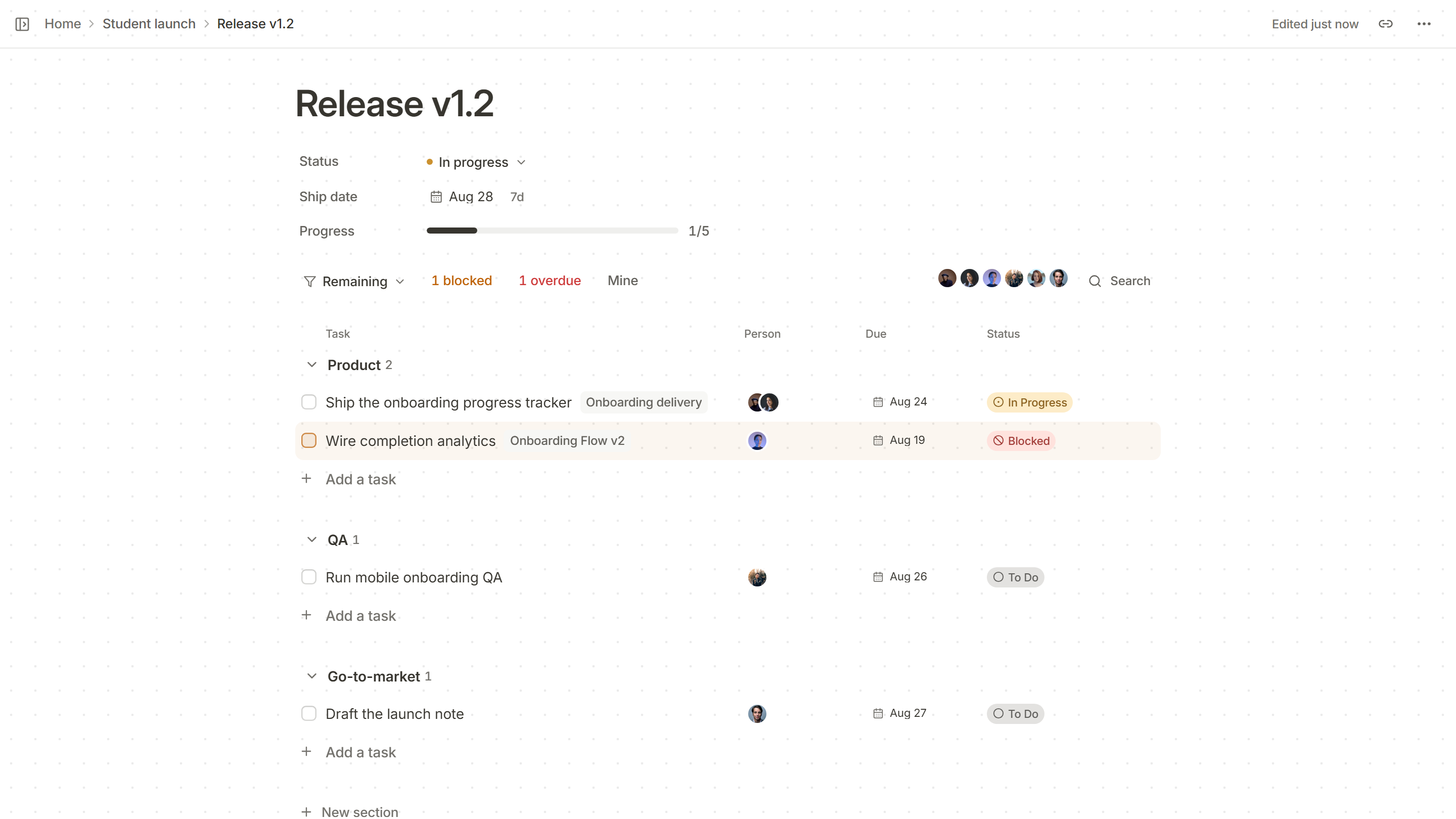
A definition of done is tested by a deadline. When time is short, resist the urge to quietly skip a line. Cut scope instead, so that what ships is still done. If a line really must be skipped, say so out loud, record the debt as a task with an owner and a date and keep the promise to pay it back.
Doing it in Kanso
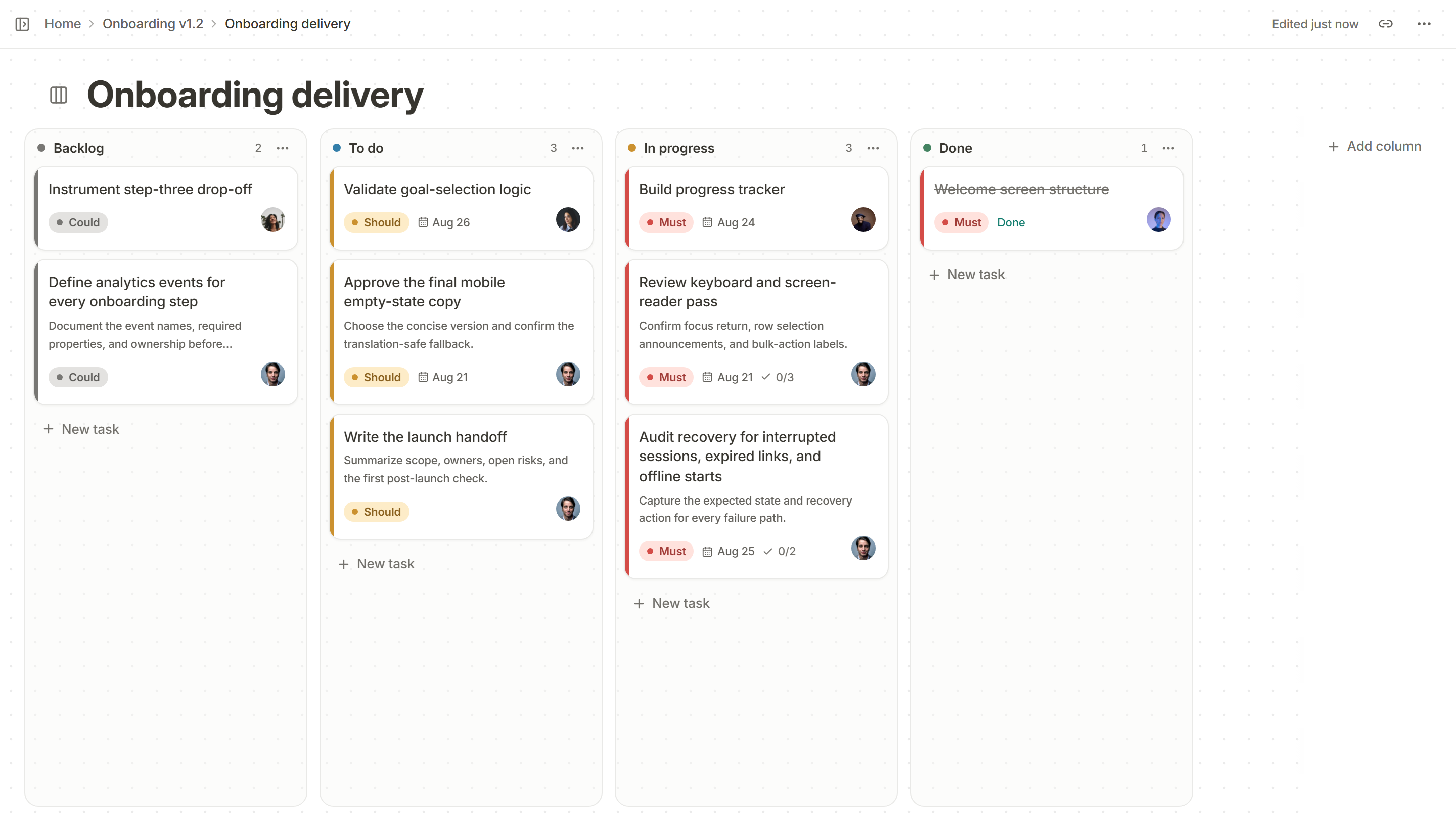
Put the team’s definition of done at the top of each board in a short note, and use each card’s acceptance criteria for what is specific to that task. For launches, the launch checklist template is a definition of done for the release as a whole.