
What notes are for
Notes let people who were not there catch up, and let people who were there remember the same thing. They are also the difference between a meeting that changed something and one that only felt busy. If nobody reads the notes, they are written wrongly.
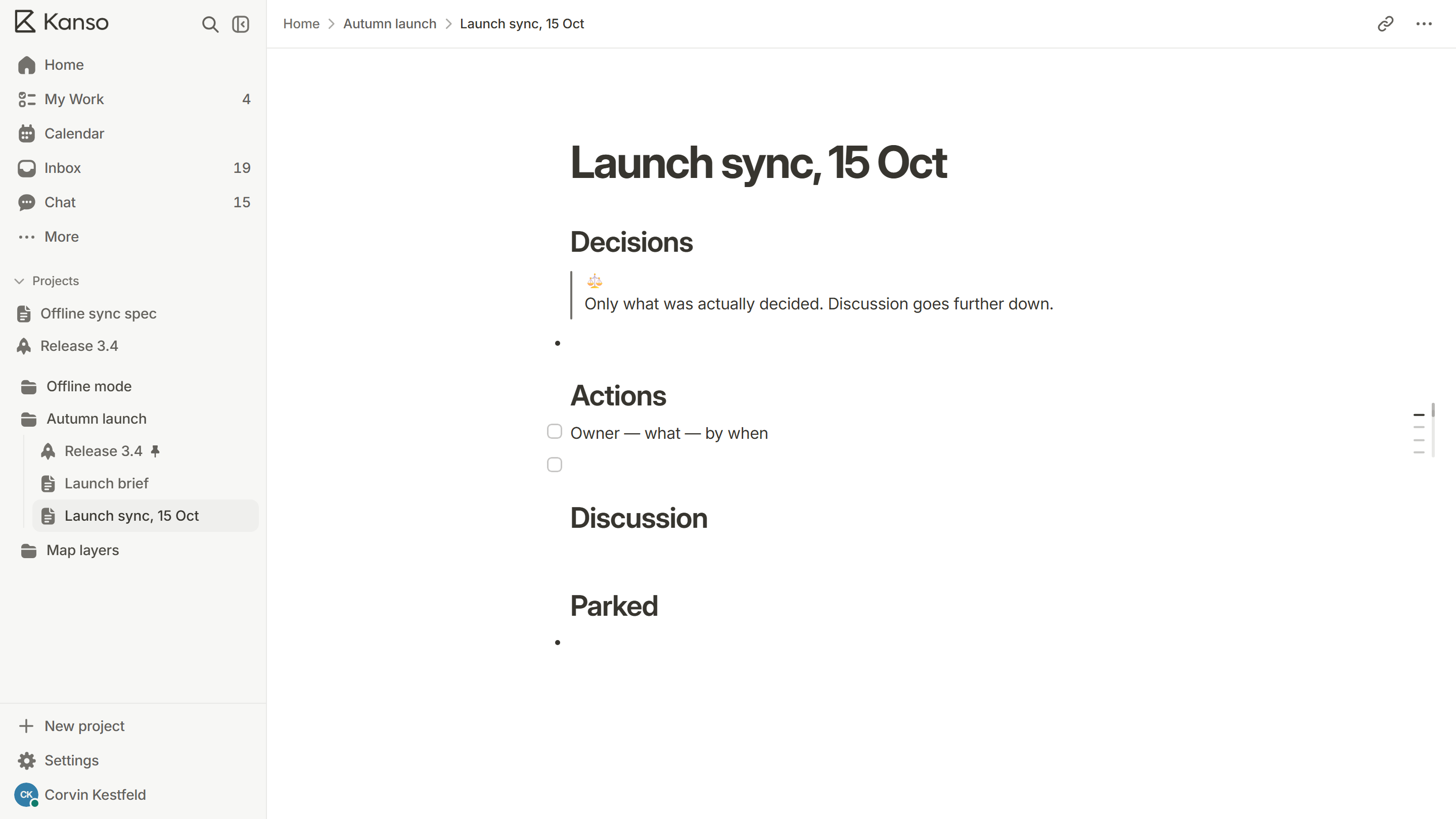
A structure for notes
- Decisions, first. Only what was actually decided, in one line each. Put them at the top, because that is what most people want.
- Actions. Each one has an owner and a date: “Owner, what, by when”. An action with no owner will not happen.
- Discussion. The reasons and the options, kept short. This is for the reader who wants to understand why.
- Parked. Topics raised but not settled, so they are not lost and not argued again.
Who takes the notes
Someone who is not leading the meeting. Rotate the job, so one person is not always the clerk. Take notes live in a shared document, so everyone can see them and correct them as you go.
Make the actions happen
- End the meeting by reading the actions aloud, with names and dates.
- Put each action where the person already looks: their task list or the board, not only in the notes.
- Begin the next meeting by checking the last one’s actions.
Keep the notes findable
- One page per meeting, titled with the topic and the date.
- One place for a recurring meeting, with the newest at the top.
- Link the notes from the project they affect.
Notes for different kinds of meeting
| Meeting | What to write down |
|---|---|
| Planning | The goal, what was chosen, what was left out and why |
| Design review | The decisions, the objections and who owns each follow-up |
| One to one | Anything either person promised, and what to revisit next time |
| Stand-up | Nothing, if the board is up to date. Write only blockers and who will help |
| Customer call | What they said in their own words, what they asked for and what you promised |
Planning
What to write down
The goal, what was chosen, what was left out and why
Design review
What to write down
The decisions, the objections and who owns each follow-up
One to one
What to write down
Anything either person promised, and what to revisit next time
Stand-up
What to write down
Nothing, if the board is up to date. Write only blockers and who will help
Customer call
What to write down
What they said in their own words, what they asked for and what you promised
Notes without a meeting
Many meetings can be replaced by a written update. Put the question and the context on a page, ask people to add their answers by a time and write the decision at the top when it is made. It takes people less time, works across time zones and leaves a record. Keep a call for the things that need it, and still write the notes.
Mistakes that make notes useless
- Writing down everything that was said. The notes become as long as the meeting and nobody reads them.
- Leaving out the decisions, because they seemed obvious in the room. They will not be next month.
- Writing actions as “we should…”. Name a person and a date, or it is a wish.
- Keeping the notes in a private notebook that nobody else can open.
- Sending the notes days later, when the details are gone and the actions have stalled.
Meeting notes in Kanso
The meeting notes template has decisions, actions, discussion and parked ready. Write an action as a to-do and promote it to a card on the board, and @mention the owner so it reaches their inbox.